Showing posts with label Trash. Show all posts

11/20/2011

The Problem With Plastics: Our Dependence

We’ve come now to the last in our series of “The Problem With Plastics.” Here’s a boiled-down version of everything we’ve learned so far:

Plastics are made at an alarming rate from petroleum, a highly-polluting, non-renewable resource, and are critically damaging our most important ecosystem on our planet- Mother Ocean- and all the creatures who inhabit her. Plastic manufacturers want to keep plastics in our homes, as single-use items, to keep their wallets nice and plush- and as long as we keep buying plastics, we keep telling them we want them to make more. The Waste Hierarchy is not sustainable, does not work, and that we are backwards in our disposal of plastics, sending half our plastics to a landfill and only 5% to be downcycled into a less valuable, less usable product. Plastics should never have been deemed as “disposable,” as they were designed to last forever, and yet used today to throw away after only one use. When you use just one plastic bottle, or just one plastic bag, you’re contributing to an accumulation of pollution that takes 1,000 years to break down, and during that process, leaks chemicals into the soil we grow our food in and into the water we drink every single day.

Phew!

And now we’ve one more thing to learn about… This one might be a toughie…

Look around your home. How many things are made out of plastic? How much plastic do you touch everyday? What would you do if all that plastic went away?

The last problem, and maybe the most defining one, is that we are unbelievably dependent on plastics in our daily life. And the biggest problem is not that we consume so much, but that we never have to see our trash after it is consumed.

Here are some facts most of us have heard before, taken from ­­­Clean AirEnvirosaxEarth 911, and Green Living Tips:

827,000 to 1.3 million tons of plastic PET water bottles were produced in the U.S. in 2006, requiring the energy equivalent of 50 million barrels of oil. 76.5 % of these bottles ended up in landfills. According to the Beverage Marketing Corp, the average American consumed 1.6 gallons of bottled water in 1976. In 2006, that number jumped to 28.3 gallons.

Of the 2.25 million tons of electronics (TVs, cell phones, computers, etc) retired in 2007, 82 percent were discarded, mostly to landfills.

Approximately 380 billion plastic bags are used in the United States every year. That’s more than 1,200 bags per US resident, per year.

Americans consume more than 10 billion paper bags per year. Approximately 14 million trees are cut down every year for paper bag production.

The United Nations Environment Programme estimates that there are 46,000 pieces of plastic litter floating in every square mile of ocean.

Greenpeace says that at least 267 marine species are known to have suffered from getting entangled in or ingesting marine debris. Nearly 90% of that debris is plastic.

If the Chinese consume resources in 2031 at a level that Americans do now, grain consumption per person there would climb from around 600 pounds today to around 2000 pounds needed to sustain a typical western diet. This would equate to 1,352 million tons of grain, equal to two thirds of all the grain harvested in the world in 2004. The average American buys 53 times as many products as someone in China and one American's consumption of resources is equal valent to that of 35 Indians. Over a lifetime, the typical American will create 13 times as much environmental damage as the average Brazilian.

Atmospheric carbon dioxide levels in November of 1958 were at 313.34 parts per million. In March 2009, levels were at 387.41 parts per million, an increase of over 20%.
  
We first started to refuse when we saw the plastic trash washed up on our favorite beach. Through research we learned how horrible a problem plastic is. Then we started trying to rid our lives of as much plastic as possible, while simultaneously realizing how incredibly difficult that task really is.

Look… It’s hard to ask you to do something, especially when it confronts our daily lifestyles. Refuse To Use is incredibly aware of the fact that this is a delicate subject. We, as an entire species of humans, have really mucked it all up, and now it’s time to make a change and do the right thing.

Refuse To Use has now laid before you a similar realization- through research and documentation of the pollution the world is encountering- and if you were moved as we were, we believe it’s time to make a decision. Is reducing our use of non-renewable resources important to you? Do you want to reduce pollution that harms both you and the living things of our Earth?

Refuse To Use has laid the groundwork about the problems with plastic, and now it’s your turn to do your part. Refuse the use of single-use plastics in your daily lives, and take the time to search out your daily items of purchase that come in different packaging.

When we first started this venture, we were overwhelmed. But have no fear! We want you to know- you’re not alone. Plastics have infiltrated our lives in a way we are hardly even aware of- that is, until you start noticing and trying to consume more responsibly.

This is where Refuse To Use wants to help you! 

We are here to help you make better choices! We have already written about refusing single-use plastic bags, coffee creamer bottles, and soda/water bottles- and how you can replace them in your daily lives easily, by just simply choosing another option that was already readily available for you.

We will continue to think of as many ways for you to replace your normal essentials that are made out of plastic with items that are not.

We hope you will continue to learn with us how we can refuse the use of plastics and be more responsible citizens of this beautiful planet. 

10/23/2011

The Problem With Plastics: Mother Ocean

A lot of people have noticed that Refuse's posts come from Honduras, a relatively undeveloped country, often considered a third-world country. My mom pointed out to me a few days ago that maybe people living in more developed countries don't believe plastics are a problem for them, or that their plastic consumption is responsible because they attempt to recycle or properly dispose of their trash, or maybe even that their trash is properly disposed of and therefore doesn't reach the Ocean like the trash of other less-developed countries.


Let me see if I can remember how it worked when I lived in the city and suburbs of the United States:


You drive to the grocery store (or whatever store), buy your items, tote them home, and store them (food goes in your refrigerators and pantries, obviously). You use your products one by one and either throw them in a trashcan or a recycling bin. One day a week (rarely two) someone in a garbage truck comes around and picks up the trash and/or recyclables you wheeled 20 steps out to the edge of your driveway or street. Sometimes you do other things like put your garbage down a shoot or drive your recyclables off to a recycling center. After this, you will never have to think about your trash ever again, and someone correctly deals with the trash. The Earth smiles at your responsible efforts. 


Down here in Honduras, living on the Ocean, we see something different. 


We collect our trash and put it at the end of the dock, where a few times a week some local individual loads the trash into their personal truck and take it to the trash dump. This is the most advanced form of trash gathering, as our vessel happens to be docked in a marina. Everyone else is responsible for their own trash. One garbage truck goes around once a week to designated trash dump areas. It is the responsibility of the individual to carry their trash to these designated areas. Because it can be quite a task (finding someone with a truck, etc.) they only carry their trash once a month. Even when the trash does make it to the dump, it does not ensure that it stays in the dump. If it happens to rain in the middle of a trash pile-up, tons of that trash gets washed out to sea. 


Where people in developed countries believe the journey of their trash has ended, we have become acutely aware that it is far from over (in fact, the journey of plastics last over 1,000 years, but that's another story).


After a heavy rain or wind (weekly events here), there is so much trash that washes to our shores from the mainland, it actually takes over entire coves and bights. Most of this trash is plastic, as plastic floats.


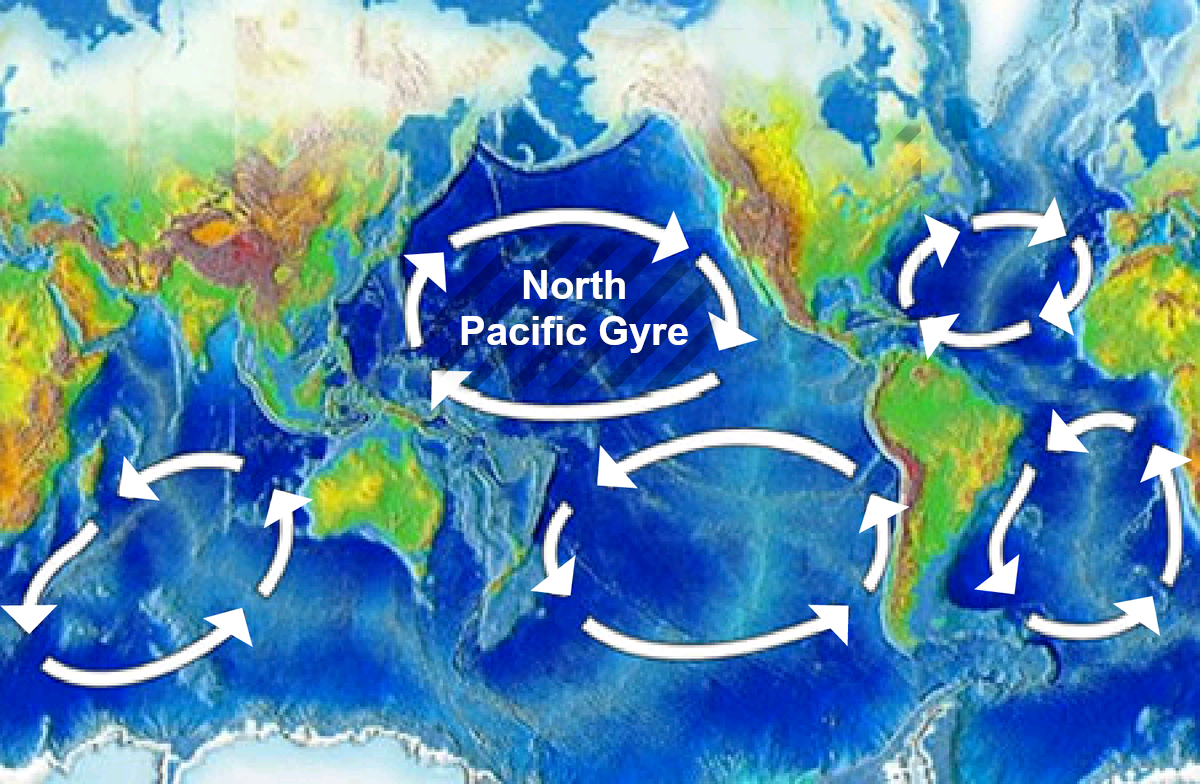
This plastic either washes up to shore in some other location (a small percentage), or it continues out to sea. The winds and currents guide it toward eddies or gyres, where plastic collects and builds up, trapped in the swirling currents. These gyres, five of them total, range from 270,000 square miles to more than 5,800,000 square miles in size. That's twice the size of the United States.


The plastic bakes in the sun and breaks down through photodegradation, leaching chemicals into the water and breaking the plastics into small pieces. In fact, for every square mile of Ocean, there are an average of 46,000 pieces of plastic litter. Once the pieces have become small enough, the fish and other creatures start to eat them. Sometimes the plastic kills the fish, but not always. Bigger fish eat smaller fish until the toxins from the plastic have worked their way up the food chain, all the way to your dinner plate and now into your body.


This is just one way plastic poisons the Ocean via humanity, and vice versa. Birds and other land creatures eat the small plastic pieces and die of digestion failure and chemical poisoning. Sea animals become entangled and drown. Every year over 100,000 sea creature deaths are from plastics that we, humans, have put in the Ocean through our carelessness.


We've explained this process before, but wanted to drive home that just because someone takes away your trash from your street doesn't mean the trash has somehow been saved from entering this journey to the Ocean. 80% of the trash floating in the gyres (90% of which is plastic) came from a landmass. 


What was once just one trash gyre (or a swirling mass of trash), has now developed into five gyers- two of which are directly off the coast of the United States. Here's a pictures of the Five Gyres below.


Notice the two most northerly gyres, off the East and West coasts of The United States,
one of which is named the North Pacific Gyre.


Captain Charles Moore, who first helped us become acquainted with the North Pacific Trash Gyre, estimates that the North Pacific Gyre alone contains 100 million tons of plastic. The South Pacific Gyre (located directly below the North Pacific Gyre) has grown to be slightly larger than the original North Pacific Gyre!


The United States has directly contributed to the two gyres off its East and West shores- with Asia's help, 80% of each gyre's mass, to be precise. That would be 80 million tons of trash, 72 million tons, or 90%, of which is plastic.


We need to stop believing that we are not the problem!


Your trash and plastics are not necessarily safely contained in a landfill! 


Your trash contributes to the problem, too! 


Until we admit to these facts and stop the denial, we will only continue contributing to more and more irreversible damage. 


Captain Charles Moore helps us understand this further. Watch this great video. He explains everything much better than us.


This is just one of many problems with plastic, albeit one of the largest problems. 


Thanks for taking the time to read about how plastics affect our big, beautiful Ocean. Be looking for our next update on The Problem With Plastics.


THANKS FOR REFUSING!

10/13/2011

REFUSE: Flavored Coffee Creamers- Responsibly Enjoying Your Cup Of Joe


Good afternoon, REFUSERS! Did all of you enjoy some coffee like we did this morning? How do you take your coffee? With sugar? With honey? With creamer? My favorite coffee beverage is a Honduran blend (found in abundance down here) with one of those deeeelicious flavored creamers, preferably French Vanilla.

Two problems here: plastic and fat. We'll start with the plastic.
  
Flavored coffee creamers come in a Number 5 Polypropylene (PP) plastic container. This plastic is thick and durable, used most often because of its resistance to heat. Businesses prefer to use thicker plastics because of durability, especially for the shipping and handling process getting these bottles to your local grocery store. Thicker plastic means more plastic, logically speaking, and we don't like more plastic. Their high melting point also makes them difficult to recycle, and therefore there are fewer recycling centers available for this Number 5 PP. Less than 24% of this type of plastic gets recycled. Some recycling centers actually reject this type of plastic and instead send it right over to the landfill where it will do absolutely nothing but become brittle in the sun and leak chemicals into the soil.

And here's an article from 2008 about Number 5 plastics leaking chemicals.


Moving on to the body portion of this conversation...

Did you know... In every Tablespoon (TBSP) of flavored coffee creamer you put into your coffee, you're consuming between 29-35 calories, 1.5-2.9 grams of fat, and .55-1.35 grams of carbohydrates.  Seems somewhat insignificant, huh? We haven't even mentioned the sugar- 10 grams per TBSP- or how it adds up over your week. People generally put 3-4 TBSP of flavored coffee creamer into each cup of coffee. I know I generally drink 2-4 cups of coffee a day, which we'll call 15 cups per week (sometimes it's a 2-cup day, sometimes it's a 4-cup day). That equals an extra 1300-1500 calories, 450 grams of sugar, per week. Oh, did I mention this is for a light or diet flavored creamer? It only gets worse. And not to mention, there is not an ounce of good stuff in there for you- no vitamins, no minerals, no protein... All sugar, oils, and chemicals. 

Bad, coffee creamer!

If you love coffee as much as I love coffee, I know how you're feeling- shocked and disappointed. "How will I ever be able to enjoy my steaming cup of joe ever again?" Don't you worry your pretty little head. Here's where REFUSING can be good for your health AND your Earth!

Half-and-half containers contribute to a 92% reduction in waste because of their extremely low levels of plastic. Some companies choose to coat the inside of the paper container with wax, completely eliminating the use of plastics! 


WE LIKE TO HEAR THAT!


As for the health aspect, half-and-half has only 9 calories per TBSP, .21 grams of fat, and 1.35 grams of carbohydrates. It contains only .75 grams of sugar (all naturally occurring, mind you), and you actually get some good stuff- calcium and protein. Feeling bored with JUST half-and-half? I even have some recipes for you so you're not missing out on anything. 

For the base recipe:
Buy your favorite brand half-and-half in the half-pint size. For a full pint size, double the recipe. I buy fat free. Add in your favorite sweetener to taste. 4 packets of that yellow sweetener does it for me.

Here are some different flavors:

Vanilla
to the base recipe, add
1 Tablespoon of Vanilla extract

Cinnamon Vanilla
to the base recipe, add
1 Tablespoon of Vanilla extract
1/2 teaspoon cinnamon


Chocolate
to the base recipe, add
1 Tablespoon of Vanilla extract
3 Tablespoons cocoa powder


Chocolate Mint
to the base recipe, add
1 1/2 teaspoons vanilla extract
3 Tablespoons cocoa powder
1 teaspoon mint extract


Dulce de Leche
to the base recipe, add
1 1/2 teaspoons vanilla extract
2 Tablespoons caramel sauce or canned dulce de leche

Note: consider decreasing the amount of sweetener in the base recipe to keep your creamer from being too sweet.

Amaretto
to the base recipe, add
1/2 teaspoon cinnamon
1 teaspoon almond extract


Chocolate Orange
to the base recipe, add
1 1/2 teaspoons vanilla extract
3 T. cocoa powder
1 teaspoon orange extract


Chocolate Cinnamon
to the base recipe, add
1 1/2 teaspoons vanilla extract
1/2 teaspoon cinnamon
3 Tablespoons cocoa powder


Unbelievable to me how easy this is. When I decided to give up coffee creamers because of the amount of plastic they used, I had no idea I was going to be able to help my body out, too.

Thanks for reading, REFUSERS.